
Recovery · 11 min read
How long does it take to recover from a marathon, Ironman or ultra?
A race is not the end of the training block: it's the hardest single session in it. Learn what actually happens to your body in the days and weeks after a marathon, 70.3, Ironman, or ultra, how long true recovery really takes, how to structure the first month back, and why returning too fast is the most common mistake in endurance sport.
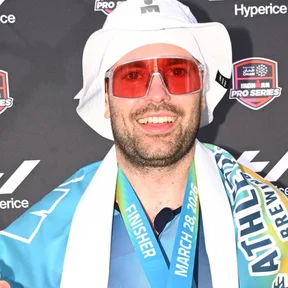
Founder of CoreRise · Software engineer & IRONMAN® 70.3® finisher · Updated April 13, 2026
The short answer
A practical rule from the research and from decades of coaching: allow one day of easy or no running per mile raced, so about a week off after a half marathon, 2–3 weeks for a marathon, 3–4 weeks for an Ironman, and 4–6 weeks or more for a 100-mile ultra. Muscle damage, immune dysregulation and inflammatory markers peak 24–72 hours after the race and resolve over 2–4 weeks for long-course events. Return to training gradually (cross-training first, easy running second, intensity last), and treat the post-race window as its own phase of the plan.
TL;DR
A race is far more damaging to your body than a normal training session, and the recovery timeline is far longer than most amateur athletes believe. A rough rule from the research and from decades of practical coaching: allow 1 day of easy or no running per mile raced. That means about a week off after a half marathon, 2–3 weeks for a marathon, 3–4 weeks for an Ironman, and 4–6 weeks or more for a 100-mile ultra. Muscle damage, immune dysregulation, inflammatory markers, and cognitive fatigue all follow predictable arcs that peak 24–72 hours after the race and resolve over 2–4 weeks for long-course events. Return to training gradually (cross-training first, easy running second, intensity last), and treat the post-race window as its own phase of the plan, not a break from the plan. Athletes who rush back underperform at their next race, get injured, or slide into post-race depression. Athletes who recover fully come back stronger.
Most endurance athletes train meticulously for months, execute a race as the single hardest effort of their year, and then, within days, try to go back to training as if nothing special had happened. It's the most common mistake in endurance sport, and the cost of it is invisible only because the cost shows up weeks later as a nagging injury, a plateau that won't budge, or a second-half-of-the-year season that never quite comes together.
A race is not a training session. It is a controlled destruction of tissue, glycogen, and nervous-system capacity that takes far longer to come back from than most athletes believe. The good news is that the recovery timelines are well documented, the structure is not complicated, and the athletes who handle post-race recovery well almost always come back stronger than they were before. This guide is the practical version of what should actually happen in the days and weeks after a big race.
What actually happens to your body during and after a race?
A race at real effort (not a parkrun, a serious one) produces a cluster of physiological stresses that a single training session rarely matches. Several things happen simultaneously.
Muscle fibres, especially in running where eccentric loading is constant, develop microscopic damage. In a marathon, biopsy studies show significant muscle damage markers (creatine kinase, myoglobin) peaking 24 to 48 hours after the race and not fully resolving for 1 to 2 weeks. In an Ironman, it's more. In a 100-mile ultra, markers can remain elevated for weeks.
Inflammatory cytokines surge as part of the immune response to that damage, which produces the flu-like feeling many athletes report the day after a marathon. The immune system itself is transiently impaired for roughly 24 to 72 hours: the 'open window' during which upper respiratory infection risk is elevated. Glycogen stores are deeply depleted and take 2 to 3 days to fully refill with proper eating. The nervous system is fatigued in ways that don't show up on the scale or in resting heart rate but do show up in perceived effort, reaction time, and mood for several days.
The time your body takes to repair all of that is longer than the soreness you feel. The soreness is the loudest signal and it usually resolves in 3 to 7 days. The deeper repair (full structural recovery of the damaged tissue, restored hormonal and immune balance, and neural recalibration) takes substantially longer, and it's what determines how fresh you actually are when you start training again.
How long does it take to recover from each race distance? (Recovery timeline by distance)
Broad guidance from coaching tradition and research, with the caveat that individual variation is large. The rough rule of thumb many coaches use is 'one day of easy or no running per mile raced', which produces the ranges below.
| Race | Easy / no running | Earliest structured return | Notes |
|---|---|---|---|
| 5K | 3–5 days | ~1 week | Short race, low muscle damage |
| 10K | 7–10 days | ~10 days | Similar intensity to 5K but double the duration |
| Half marathon | 10–14 days | ~2–3 weeks | Most amateurs rush this |
| Marathon | 2–4 weeks | ~4 weeks | Reverse taper of similar length to the pre-race taper |
| 70.3 / half Ironman | 2–3 weeks | ~3–4 weeks | Swim/bike available as low-impact recovery before running |
| Full Ironman | 3–4 weeks minimum | ~4–6 weeks | Many experienced athletes treat full window as 6 weeks |
| 50K–100 mile ultra | 3–8 weeks | ~6–12 weeks | Structural tissue repair can take months |
These are guide rails, not commandments. Your real recovery depends on how deep you went, your training age, your nutrition, your sleep, your life stress, and how damaged you were coming in. Err longer, not shorter.
What should the first 72 hours look like?
The first three days after a long-course race are the most important window for setting up the rest of the recovery. They should be boring, not heroic.
- Eat aggressively. Your glycogen is empty, your muscles need amino acids for repair, and your immune system needs calories. Don't diet in the first 72 hours: eat carbs, eat protein, eat fruit, eat whatever sounds good. Post-race under-eating is one of the fastest ways to slow recovery down. (See daily nutrition for the underlying targets.)
- Hydrate with fluids and sodium. Rehydration from a long race is not a one-glass-of-water problem. Aim for 1.5 litres of fluid per kilogram of body weight lost during the race, plus sodium: electrolyte-dense rehydration or salt-rich food works fine.
- Walk, don't run. Gentle walking for 20 to 60 minutes improves circulation and speeds clearance of metabolic byproducts without adding stress to damaged tissue. Walking is the single most underrated post-race recovery tool.
- Sleep as much as the day allows. Post-race naps are productive. Bedtime should be early. The adaptation and repair work happens in sleep.
- No training. Day 1 and day 2 after a marathon or Ironman are not training days. Resist the urge to 'spin the legs out' on a hard bike ride. The spin is fine; the hard part is not.
How should you structure the first month back?
A month is the honest minimum for a full return from a marathon or 70.3, and it isn't hard if you treat it as its own phase of the training plan rather than as a frustrating break. The general pattern:
- Days 1–3: rest, eat, sleep, walk. No structured training.
- Days 4–7: light cross-training starts. For runners, short easy rides or swims. For triathletes, the non-injured disciplines come back first. Short walks continue.
- Week 2: easy running returns in small doses. 20–30 minute easy runs, every other day. No intensity. Cycling and swimming stay easy.
- Week 3: running volume rebuilds toward roughly half of your normal training weeks. Introduce modest tempo if the body is tolerating volume well. Still no race-pace or VO2max work.
- Week 4: normal training volume resumes, first real intensity sessions return, but quality should be slightly below peak-training expectations. This is the transition into the next macrocycle or maintenance phase.
Listen to your body more than the calendar. A 45-year-old coming back from a first marathon may need longer than a 25-year-old who ran the same race. Soreness alone is a poor metric: how easy sessions feel, how recovery between them goes, and how your sleep and mood are tracking are all better signals.
What about the post-race blues?
One thing that almost no first-time marathoner is warned about: the period 3 to 14 days after a big race is when mood crashes tend to appear. The research and clinical experience are consistent on this. Athletes often describe feeling unexpectedly flat, unmotivated, tearful, or low in the week or two after the race they've been training months for. It has a name in sports psychology literature (post-race blues or post-race depression), and it is extremely common, particularly after long-course events that carried significant personal meaning.
The mechanisms are thought to be a combination of hormonal rebound (cortisol and dopamine both shift in the days after a big race), the sudden loss of the goal-oriented structure that organized months of life, and a kind of existential 'what now?' feeling that's sharper the bigger the race was. None of it is a sign that anything is wrong with you.
What helps: knowing it's coming, keeping gentle daily movement as a rhythm, staying socially connected, getting outside in daylight, keeping eating and sleeping on track, and, importantly, not committing to the next big race in the emotional flatness of post-race week. Many athletes make decisions during the blues that they later regret. Wait a week or two, let equilibrium return, and then plan.
When can you actually race again?
For short races (5K, 10K), you can productively race again in 1 to 2 weeks if you have to. For a half marathon, allow 3 to 4 weeks between efforts. For a marathon, most physiologists recommend at least 6 weeks between full-effort marathons, and most serious runners target 3 to 4 months between peak marathons to allow for proper build and recovery. Running two marathons inside 8 weeks is possible but it is a serious load for an amateur and the second one is rarely as good as the first.
For 70.3 triathlons, 4 to 6 weeks between races is workable for a fit amateur. For full Ironmans, most coaches recommend at least 12 weeks between efforts, with many suggesting no more than two full Ironmans per year for an amateur who cares about performance. For 100-mile ultras, one per year is what most experienced ultrarunners settle on after a few years of pushing it harder and realizing the cost.
'How soon can I race again?' is the wrong question. 'How long until I'm genuinely recovered and ready for a useful build?' is the right one, and it's almost always longer than your impatience wants.
What are the most common post-race mistakes?
Five mistakes catch nearly every amateur at some point.
- Returning to training too fast. The most common mistake by a large margin. The motivation surge in the days after a good race is emotional, not physical. Your legs are telling you they're ready because they feel less sore. They are lying. Wait.
- Not eating enough post-race. Athletes who spent the race carefully managing fueling suddenly switch into a 'I earned it' mode and then, 2 days later, start eating less than usual because they feel guilty or because they're not training. Eat enough to repair.
- Signing up for the next big race within days. The post-race high is real, fun, and not a good decision-making state. Wait until you have a clear head before committing to the next A race.
- Ignoring niggles that appeared during the race. A calf cramp, knee pain, or an ankle twinge that appeared late in a marathon is not a race-only problem: it's a signal about loading, fatigue, or form that was hidden by the fitness the taper bought you. Address them in the recovery window, not later.
- Treating the post-race period as a blank space. No structure means some athletes do too much; others do nothing and lose fitness faster than necessary. A light but structured recovery plan is better than either extreme.
Key takeaways
- A race is the hardest session of your training block, not the end of it. Recovery deserves its own plan.
- Rough recovery timelines: 3–5 days for a 5K, 7–10 for a 10K, 10–14 for a half, 2–4 weeks for a marathon or 70.3, 3–4+ weeks for an Ironman, up to several months for 100-mile ultras.
- The first 72 hours are boring: eat aggressively, hydrate with sodium, walk, sleep, don't train.
- Build the first month back as a phase: rest → cross-train → easy running → rebuilding volume → intensity.
- Post-race blues are common and normal. Don't make major decisions in that week.
- The time between races matters more than athletes realize. 6+ weeks between marathons, 12+ between Ironmans, 1/year for 100-milers.
- Most post-race mistakes are rushing: back to training, back to racing, or back to dieting.
Frequently asked questions
Is soreness a good measure of how recovered I am?
Can I do a recovery run the day after a marathon?
How quickly does fitness actually drop during a recovery week?
Should I do a massage or use compression boots after a race?
Is it normal to feel unmotivated in the weeks after a big race?
When should I commit to my next race?
Inside CoreRise for iOS
How CoreRise handles your post-race recovery
A race in CoreRise is treated as exactly what it is: the hardest single session of your training block and a physiological event that needs its own phase of the plan. When you complete a race, your coach automatically enters the recovery phase that corresponds to the distance you just ran, with volume guidance, cross-training suggestions, and a gradual return-to-running progression already scheduled. You don't have to figure out what to do on day 4 or day 10: the plan is already there.
Throughout the recovery window, you can tell the coach how you're feeling in plain language. Sore, tired, flat, or unexpectedly good: the next few days adjust in response. When the natural post-race blues show up, the coach knows to expect them and will adjust the next steps rather than pushing through. And when you're ready to plan the next race, your coach has the full memory of how the last one went (what worked in the taper, what didn't, how the recovery actually progressed), so your next macrocycle starts from real data, not a blank page.
- Post-race recovery is built into your plan as its own phase, scaled to the race distance.
- The return-to-running progression is structured week by week so you don't have to guess.
- You can report how you feel in natural language and the next days adjust around it.
- Your coach knows post-race blues are common and treats them as part of the arc, not a training problem.
- Every race is remembered in detail, so the next macrocycle starts from real history, not a clean slate.